English| EUR
Suggested for you
More currencies
Choose a language
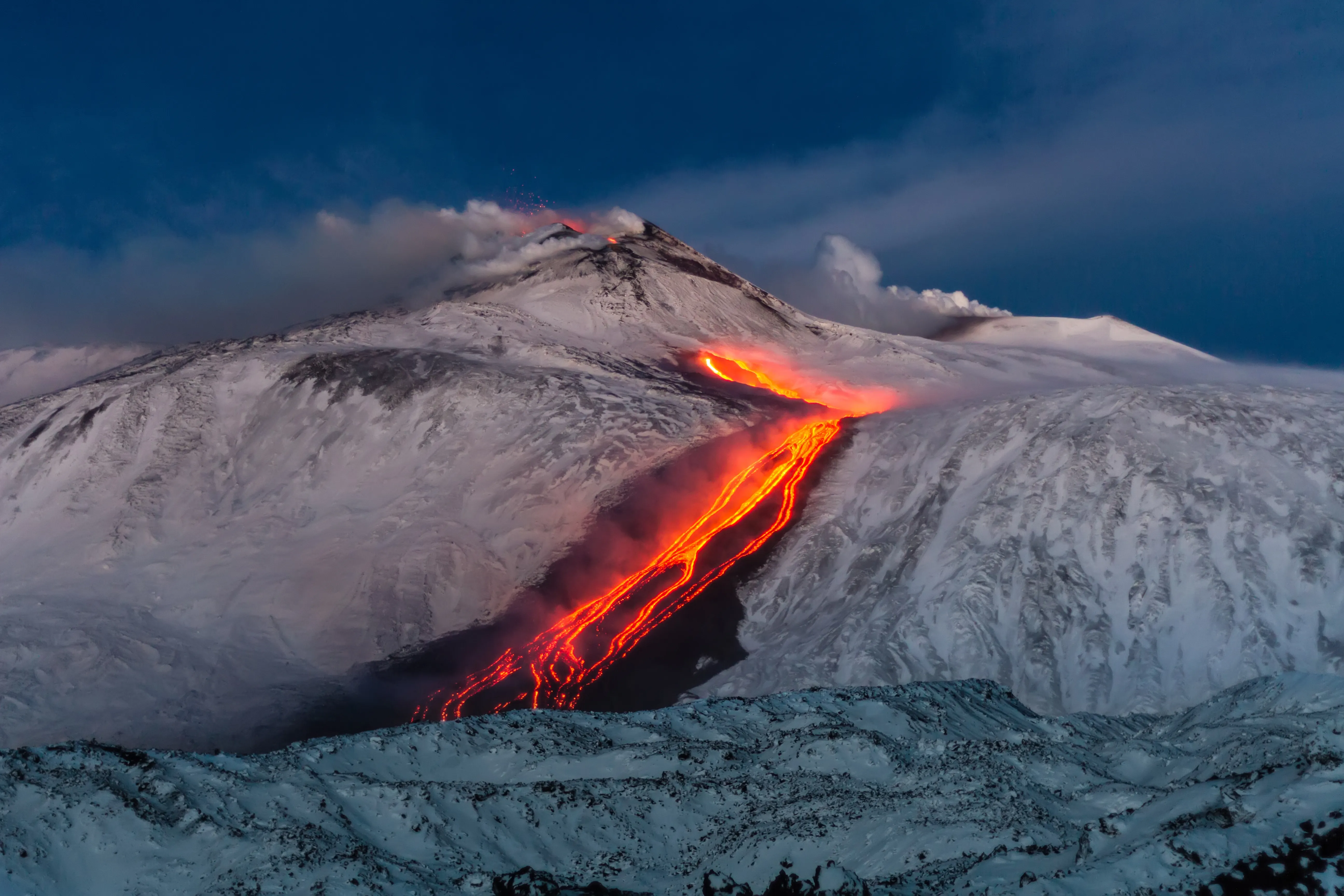
Mount Etna's lava activity shifts with each eruption cycle, and excursion routes adapt in real time to volcanic conditions. This guide explains which craters remain accessible, when lava flows are visible, and how guided tours navigate the active summit zone safely.
Quick answer
Etna excursion lava routes target either recent solidified flows on the lower slopes or, during eruptive phases, the summit craters between 2,900 and 3,300 meters where molten rock surfaces intermittently. Park authorities adjust access daily based on seismic readings and gas emissions. Guided tours operate year-round from 08:45 to 16:00, but active lava sightings depend entirely on current volcanic activity—summit excursions may approach fumaroles and cooling flows rather than fountaining vents when eruptions pause.
Mount Etna releases more lava annually than any other European volcano, yet the molten rock rarely appears where visitors expect. Most etna excursion lava itineraries lead to solidified flows from recent years—black, jagged fields that cooled weeks or months earlier—rather than glowing fountains. Active lava viewing requires precise timing with eruption cycles that operate on their own schedule, not tourism calendars. The summit crater complex holds four active vents: Voragine, Bocca Nuova, Northeast Crater and Southeast Crater. Each produces different styles of activity. Voragine tends toward sustained lava lakes, while Southeast Crater launches episodic paroxysms that build new cinder cones in days. Cable car access reaches 2,500 meters, then 4x4 vehicles climb to 2,900 meters where the guided walk begins. The final 400-meter ascent crosses ash fields and brittle lava crusts that fractured during the most recent eruptions. Fumaroles exhale sulfur plumes at temperatures exceeding 400°C, and volcanologists monitor ground deformation hourly. Winter excursions navigate snow-covered lava while summer routes contend with afternoon heat radiating from black basalt. Seasonal weather affects visibility more than lava activity itself—cloud cover at 3,000 meters can obscure craters entirely even when lava glows below. The national park enforces closure zones that shift daily based on tremor data and gas concentration. Tours scheduled during quiescent periods still reach cooling flows and collapse pits where lava drained weeks earlier, offering context for the volcano's restless geology. Morning departures between 08:45 and 10:30 provide the longest window at altitude before afternoon winds intensify and clouds descend. Evening excursions exist but operate only during confirmed eruptive phases when incandescent lava remains visible after sunset. Transport and guiding fees apply regardless of whether active lava appears—the volcano dictates the spectacle, not the itinerary.
“Etna's lava activity operates on geological time, not visitor schedules—tours adapt to what the volcano offers each day.”
The best arrival window is 08:45–10:30 to avoid mid-day crowds and ensure sufficient time for mountain activities before afternoon closure. Planning your excursion during shoulder seasons provides the most stable conditions for exploring lava formations.
—
Early arrivals experience quieter trails and cooler temperatures for hiking.
Mild, 10°C to 20°C
Spring weather offers clear skies, though higher elevations remain cold.
Stable, 8°C to 18°C
Autumn provides dry conditions and manageable temperatures for reaching volcanic areas.
Hot, 20°C to 30°C
Summer heat requires early starts to complete activities before the afternoon sun intensifies.
Verdict: The best time for an excursion is between 08:45 and 10:30 during the months of April, May, September, or October.
Access to Mount Etna National Park is free, meaning visitors do not pay an entrance fee to enter the protected area. Costs for excursions arise only when utilizing professional mountain guides or specific transportation services to reach higher altitudes.
Verdict: While park entry is 0 EUR, most visitors pay for guided tours or specialized transport to safely access lava zones.
Volcanic terrain and high altitude demand specific gear and preparation.
Everything you need to know about etna excursion lava
While volcanic activity varies, guided walks often lead to craters and historical solidification sites that demonstrate the power of the volcano. Check local geological updates regularly as active lava flows are unpredictable and subject to safety restrictions.
Booking your guided hike or vehicle transport ahead of time is recommended to ensure availability during high season. You can funnel through our booking resources to secure your spot for a professional guided climb.
Etna Sunset Excursions
Read more GuideEtna Excursion Prices
Read more Tickets & toursEtna 4x4 Excursions
Read more GuideEtna Excursion Reviews
Read more GuideEtna Tour Temperature and Weather
Read more Tickets & toursEtna Excursions from Catania
Read more Tickets & toursEtna Excursions from Taormina
Read more Tickets & toursEtna Summit Tours
Read more