9 hr
Mount Etna Summit Hike with Volcanological Guide
Ascend Europe's most active volcano to 3,400m with expert guides through lava fields and lunar landscapes
Reserve
Hand-picked by our editors — only the best 5 summit experiences from 27 reviewed.
Verified partners for every tour, free cancellation where available, and instant confirmation on every booking.
9 hr
Ascend Europe's most active volcano to 3,400m with expert guides through lava fields and lunar landscapes
Reserve
5 hr
Ascend Europe's highest active volcano with an expert volcanologist to explore craters and lava formations
Reserve
6 hr
Ascend Europe's most active volcano to 2,000m, explore a lava cave, and savor Sicilian treats with panoramic views
ReservePrices from verified partners. Availability updates in real time at checkout. Free cancellation policies apply where shown.
The landmarks, rooms, and views travelers on this tour remember — all visible on a single visit.
A massive horseshoe-shaped caldera formed by ancient collapses, offering insights into volcanic history.
These accessible extinct craters offer an easy walk and a close look at volcanic soil.
The active peak area reachable by guided etna tour to the top, showing ongoing fumarolic activity.
An area on the north side known for past lava flows and forest regrowth.
The summit trek offers a more immersive volcanic experience, while the lower altitude crater walks provide a accessible exploration of the landscape for casual visitors. Choosing the right etna tour to the top tour ensures your volcanic adventure matches your fitness and interest level.
| Feature | Top pick Summit Trek | Lower Crater Trek |
|---|---|---|
Physical Demand |
High | Low to Moderate |
Summit Crater Access |
Yes | No |
Requirement of Guide |
Mandatory | Optional |
Duration |
6–8 hours | 2–4 hours |
Altitude Gain |
1,000+ meters | 200–400 meters |
| See tickets → |
Verdict: Opt for the guided summit experience if you seek exclusive access to active volcanic vents, or select lower altitude excursions for a flexible etna tour to the top tickets experience that avoids extreme exertion.
Choose your ticket, select your date, and reserve in under two minutes. Secure checkout handled by our verified partner.
Instant confirmation by email, with a mobile voucher you can save offline. No printing, no queuing at a collection desk.
Arrive at the entrance, show your voucher on your phone, and walk in. Most tickets include priority or skip-the-line access.
Practical details for your visit straight from our verified partners — hours, access, rules, and how to get there.
Rifugio Sapienza, 95030 Nicolosi
Main parking area
Drive to Rifugio Sapienza from Catania. Parking is available on-site.
AST bus service departs Catania daily.
Layered mountain clothing is essential due to high-altitude temperature drops. Sturdy, broken-in hiking boots are required for an etna tour to the top.
Only bring small backpacks containing essential supplies. Security checks may occur at lift stations during your etna tour to the top.
Photography is permitted in most areas. Respect restricted zones near active vents during your etna tour to the top.
Summit routes are strenuous and involve uneven volcanic terrain. Those with heart or respiratory conditions should consult a doctor before an etna tour to the top.
Maintain signal awareness as service is intermittent at higher altitudes. Use your phone primarily for navigation or emergency contact.
The base area is accessible, but high-altitude summit trails are generally not suitable for small children. Ensure your group is physically prepared for an etna tour to the top.
Bring sufficient water and snacks for the duration of your hike. Facilities near Rifugio Sapienza offer dining, but options are limited at the summit.
Pets are generally not permitted on guided high-altitude treks. Confirm specific operator rules before bringing animals.
Always follow the instructions of your guide regarding volcanic activity. Weather can shift rapidly on the mountain.
Best time to go, insider tips, nearby landmarks, and the cancellation fine print — flip through to skim what matters to you.
How crowds, weather, and events shift across the year.
Mild temperatures with manageable crowds. Ideal for clear views.
Warmest weather but high afternoon heat. Best to arrive early.
September offers stable conditions before winter snows. Perfect for photography.
Significant snow accumulation. Many summit trails remain closed.
Small details that turn a good visit into a great one.
The sun is intense at high altitudes; apply sunscreen frequently. Reflection off volcanic ash increases exposure.
Non-bookable sights within a short walk — free to visit, easy to pair.
Easily accessible extinct volcanic cones near the parking lot.
Offers a panoramic look at the Valle del Bove.
Flexible, no hidden fees.
Full refunds are typically available for cancellations made 24 hours prior to the start time. This policy applies to guided excursions and does not include the 0 EUR base area entrance fee.
Hand-picked options within walking distance — pick a district for vibe, or a specific hotel for convenience.
Upscale lodge near the cable car station.
Traditional accommodation in the gateway town.
Basic shared rooms for hikers.
Mount Etna rises 3,357 metres above Sicily's eastern coast, its summit elevation redrawn every few months by fresh lava accumulation. The volcano has erupted more than 200 times since records began in 1500 BCE, yet its upper slopes remain accessible to visitors when seismic conditions permit. Four summit craters — Bocca Nuova, Voragine, Northeast Crater, and the Southeast Crater Complex — release steam plumes visible from Catania 30 kilometres away. The south slope route from Rifugio Sapienza at 1,923 metres has served as the primary tourist ascent corridor since the cable car opened in 1947, rebuilt twice after lava flows destroyed earlier infrastructure. An Etna tour to the top begins with a 15-minute cable car ride to Torre del Filosofo station at 2,500 metres, followed by a guided trek across volcanic scoria and ropey pahoehoe flows. Alpine guides monitor tremor data transmitted from INGV Catania's real-time seismic network, adjusting summit access windows based on gas emission levels and ground deformation. The final 800-metre climb crosses terrain that did not exist before the 2002 eruption — black cinder fields, fumaroles exhaling sulphurous vapour, and hardened lava rivers frozen mid-cascade. Temperatures drop 6 degrees Celsius per thousand metres of elevation gain; August afternoons at the crater rim can feel like March at sea level. The summit craters themselves are exclusion zones during eruptive phases, but between events visitors approach within 400 metres of the active vents. Northeast Crater, the tallest of the four cones, gained 250 metres of height between 1911 and 2024 through strombolian fountaining. Voragine's collapse pit extends 300 metres below the summit plateau, its floor visible only when wind clears the steam. Guides carry gas detectors calibrated for sulphur dioxide and carbon dioxide; readings above 10 parts per million trigger immediate descent. The return journey retraces the scoria slope to the cable car, though some Etna tour to the top itineraries extend the route to include lava tubes formed during the 1792 eruption, their basalt ceilings draped with mineral deposits.
"Temperatures drop 6 degrees Celsius per thousand metres of elevation gain; August afternoons at the crater rim can feel like March at sea level."
A step-by-step walkthrough of the visit — what you'll see, how long each stage takes, and the details that matter.
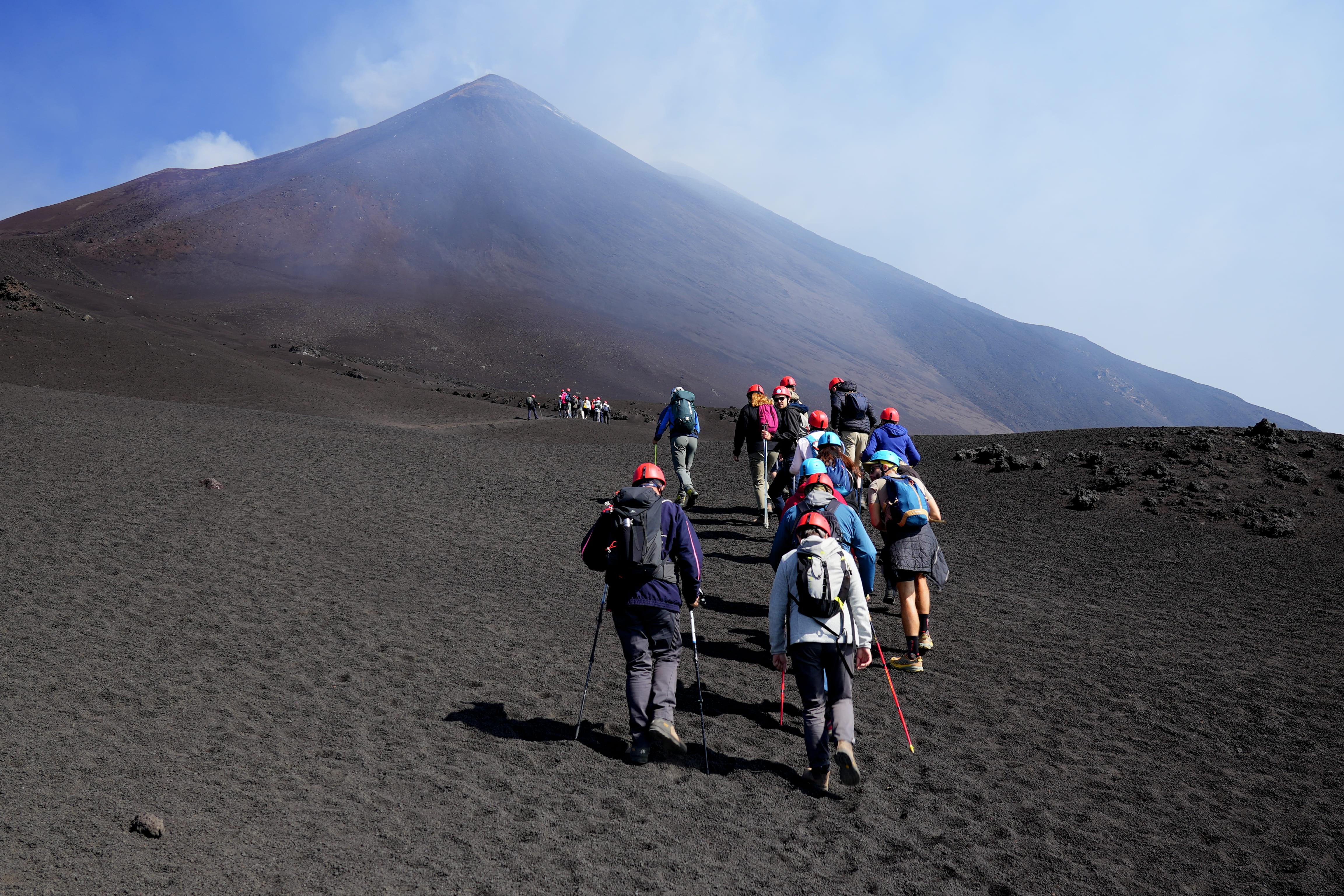
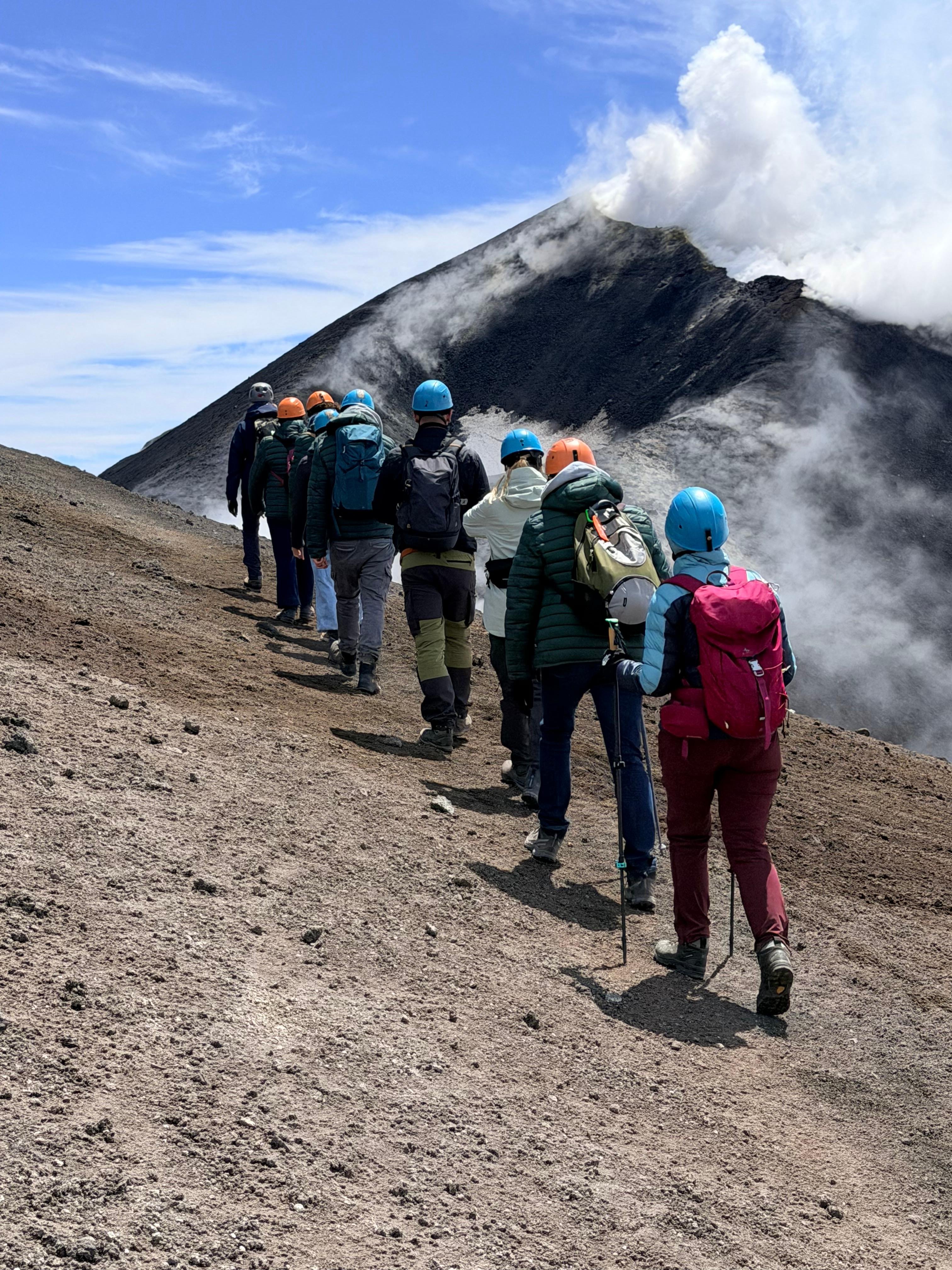
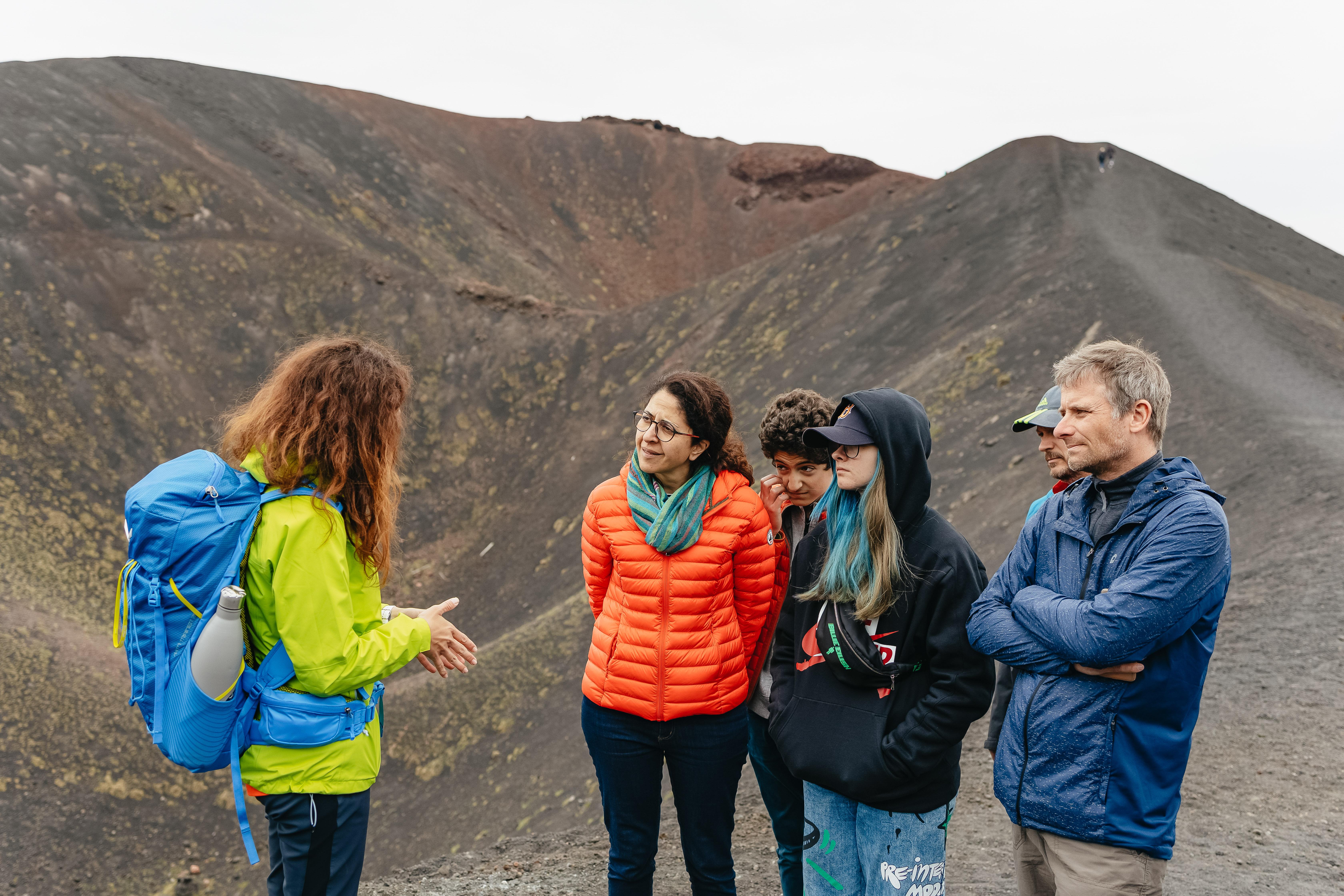
You arrive at Rifugio Sapienza by 08:30, the cable car's lower station already busy with groups assembling trekking poles and layered jackets. The 15-minute ascent delivers you to Torre del Filosofo at 2,500 metres, where your volcanological guide reviews the day's seismic data and distributes helmets. The scoria path begins gently, winding past stunted Etna broom and juniper stands, then steepens as you cross the 2002 lava field — a frozen black delta studded with volcanic bombs the size of refrigerators. By 3,000 metres the vegetation ends. You pause at a fumarole vent to feel the heat radiating from cracks in the basalt, then continue across a moonscape of lapilli and ash. The final push climbs a ridge of welded spatter, each step sinking slightly into the loose cinder. At 3,300 metres you reach the crater rim: Bocca Nuova exhales a white steam column to your left, Voragine's collapse pit yawns 300 metres deep ahead, and the Ionian Sea stretches blue and flat to the horizon. Your guide points to fresh lava flow scars on the Southeast Crater's flank, dated to three months ago. You spend 20 minutes photographing the vents and absorbing the scale, then begin the 90-minute descent to the cable car.
The area is open from 08:30–17:30 daily. Please plan your activities within these hours.
Yes, summit access requires a paid guided tour, which functions as your etna tour to the top tickets.
Summit access depends on weather and volcanic activity. Always check with your guide regarding your etna tour to the top.
Wear sturdy boots and layered clothing. Proper preparation ensures a successful etna tour to the top.
High-altitude treks are strenuous and generally not suitable for young children. Evaluate your child's fitness for an etna tour to the top.
For an etna tour to the top, arrive between 08:30–09:30 to avoid cloud cover.
Limited food is available at the summit; carry your own supplies during your etna tour to the top.
The base area has a 0 EUR entrance fee, while summit access requires a paid guided tour for any etna tour to the top.
You can arrive via car or bus to Rifugio Sapienza, 95030 Nicolosi, which is the standard departure point for an etna tour to the top.