
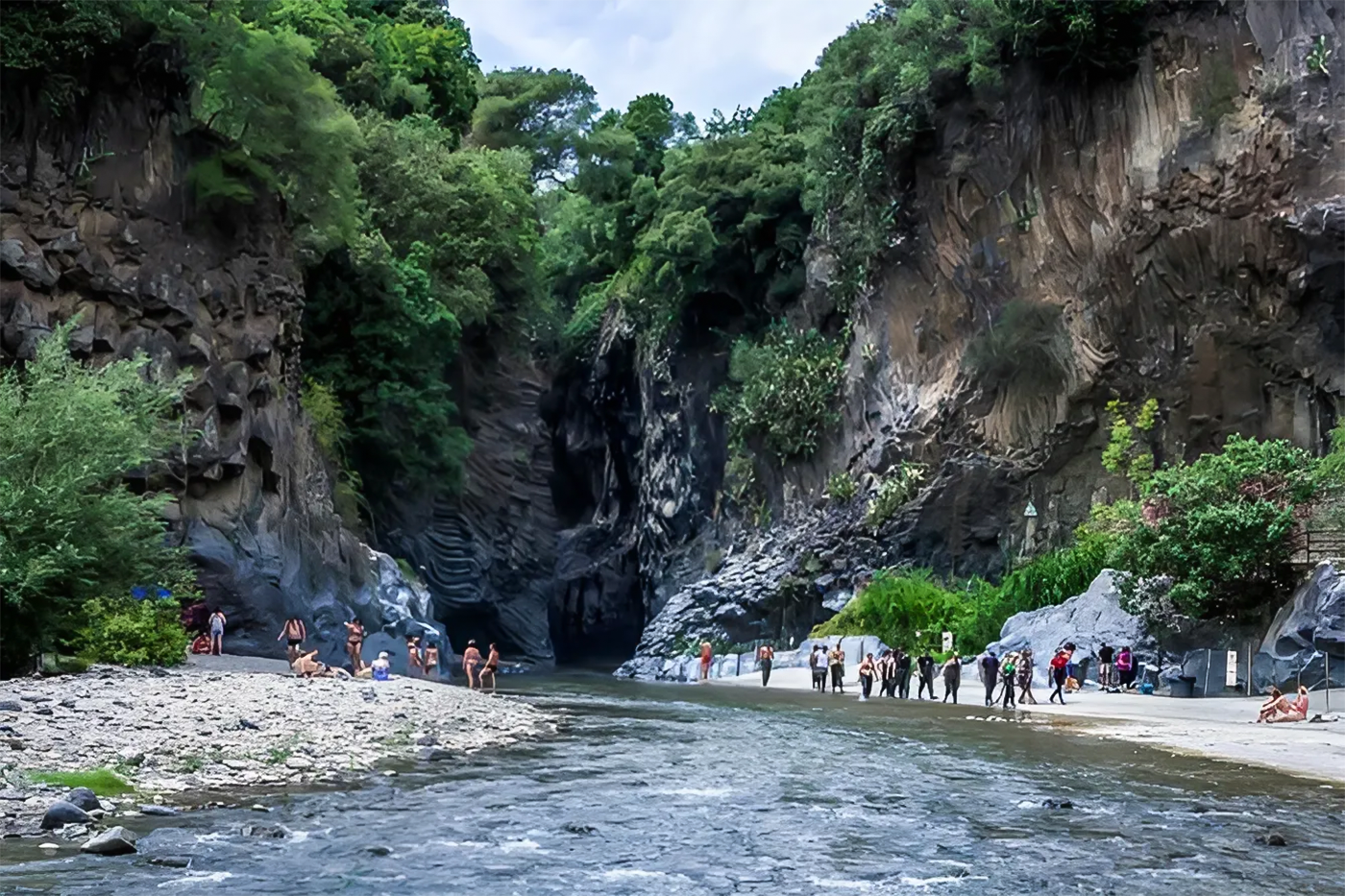
8 hr
Mount Etna & Alcantara Gorges Day Trip with Lunch
Explore volcanic craters, hike ancient lava flows, venture into caves, and swim in a stunning river canyon
Reserve
Hand-picked by our editors — only the best 5 summit experiences from 12 reviewed
Verified partners for every tour, free cancellation where available, and instant confirmation on every booking.
8 hr
Explore volcanic craters, hike ancient lava flows, venture into caves, and swim in a stunning river canyon
Reserve
5 hr
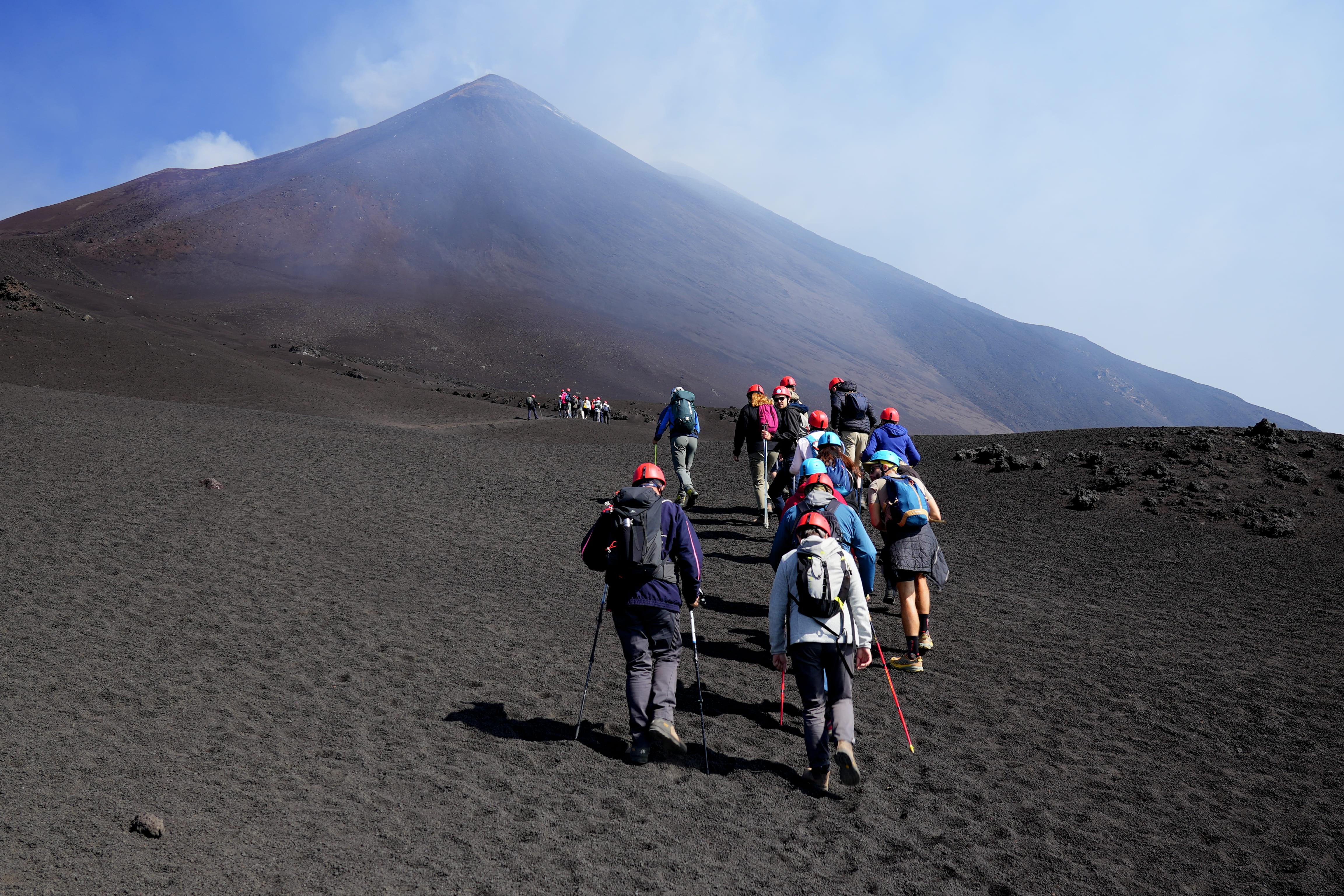
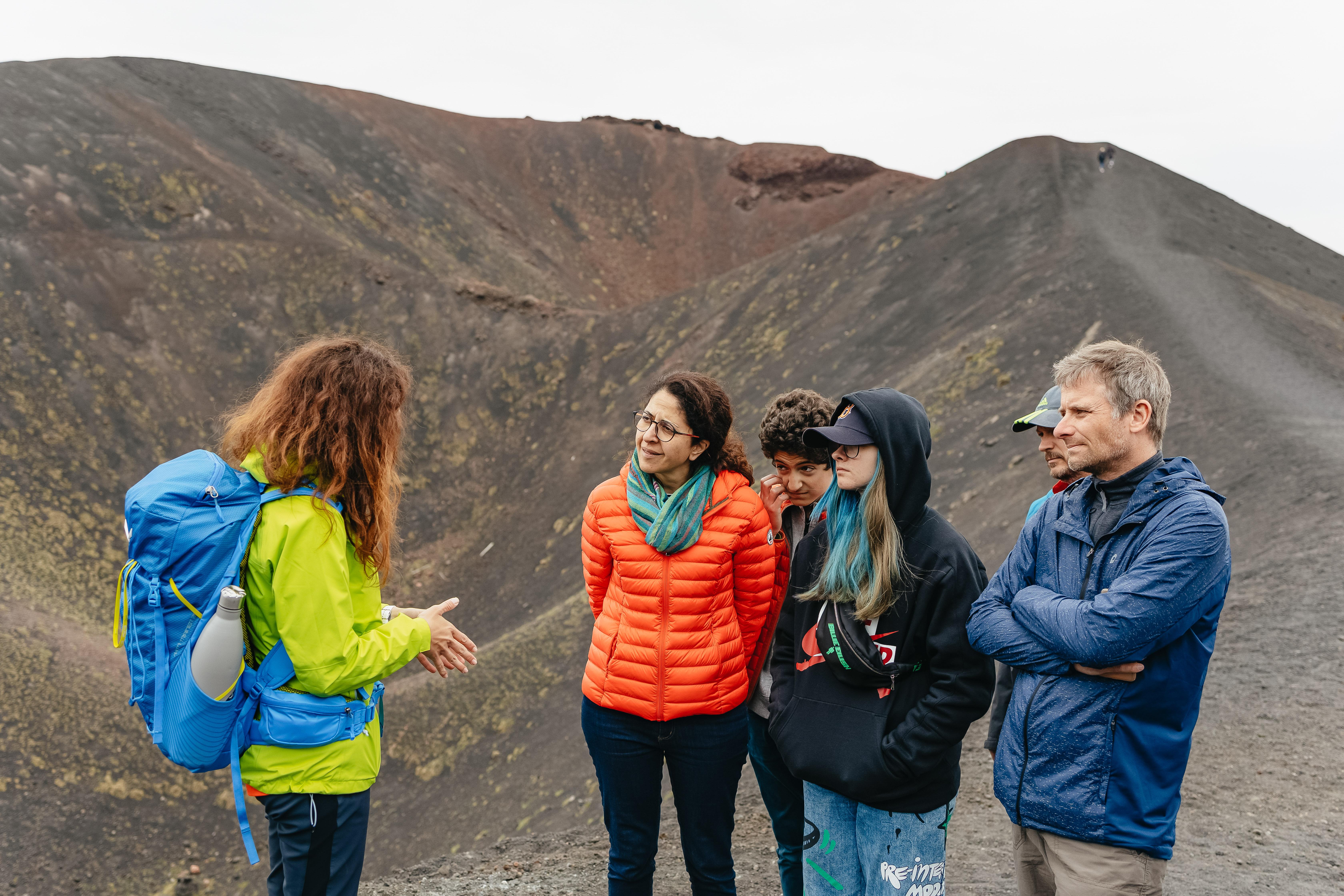
Trek Europe's tallest active volcano with a certified guide to 3,000m or 3,400m altitude
Reserve
6 hr
Explore Europe's most active volcano at 2,000m, walk through a lava cave, and savor Sicilian treats
ReservePrices from verified partners. Availability updates in real time at checkout. Free cancellation policies apply where shown.
The landmarks, rooms, and views travelers on this tour remember — all visible on a single visit.
These inactive volcanic cones are located near Rifugio Sapienza and offer easy walking paths with views of historic lava flows.
A high-altitude landmark accessible by 4x4, situated near the summit area of the volcano.
A massive, ancient volcanic caldera offering a dramatic concave landscape created by millennia of eruptions.
The primary base station at 1,910 meters providing essential services, parking, and transit connections.
The active heart of the volcano where visitors can witness geological power at high elevations.
An etna excursion from catania provides raw geological adventure, whereas a Taormina day trip offers refined coastal culture; most visitors prefer the volcano for active exploration and the town for leisure.
| Feature | Top pick Mount Etna | Taormina |
|---|---|---|
Primary Focus |
Volcanic geology and hiking | Coastal history and architecture |
Physical Exertion Level |
Moderate to high | Low to moderate |
Logistical Planning |
Rifugio Sapienza trailhead access | Public bus or train transit |
Key Sights |
Craters and lava flows | Greek Theatre and Corso Umberto |
Typical Duration |
4–8 hours | 5–7 hours |
Terrain Type |
Rugged volcanic rock | Paved urban streets |
| See tickets → |
Verdict: Choose the etna excursion from catania tours if you seek active landscapes, but opt for Taormina if you prefer exploring ancient landmarks and local shopping.
Choose your ticket, select your date, and reserve in under two minutes. Secure checkout handled by our verified partner.
Instant confirmation by email, with a mobile voucher you can save offline. No printing, no queuing at a collection desk.
Arrive at the entrance, show your voucher on your phone, and walk in. Most tickets include priority or skip-the-line access.
Practical details for your visit straight from our verified partners — hours, access, rules, and how to get there.
Layered mountain clothing is recommended for an etna excursion from catania. Wear sturdy, closed-toe trekking shoes to navigate volcanic terrain comfortably.
Keep backpacks lightweight for your etna excursion from catania. Secure storage is rarely available at the base, so carry your belongings with you.
Capture the unique volcanic landscape during your etna excursion from catania. Photography is permitted throughout the base areas of Mount Etna.
While the base areas are accessible, reaching high-altitude zones on an etna excursion from catania requires specialized cable car or 4x4 transport.
Families find an etna excursion from catania suitable for children who enjoy outdoor activity. Ensure kids wear appropriate footwear for the volcanic soil.
Several restaurants and cafes are located at the Rifugio Sapienza complex. It is advisable to carry water during your etna excursion from catania.
Best time to go, insider tips, nearby landmarks, and the cancellation fine print — flip through to skim what matters to you.
Flexible, no hidden fees.
Cancellation terms for an etna excursion from catania tour are set by individual operators. Refunds typically require 24-48 hours notice before the scheduled departure.
Mount Etna has erupted more than 200 times since records began in 1500 BCE, reshaping Sicily's coastline and burying ancient Greek settlements beneath basalt flows that now form terraced vineyards. The volcano rises 3,357 metres above the Ionian Sea, its summit craters venting sulfur plumes visible from Taormina's ancient theatre 28 kilometres north. UNESCO inscribed the massif as a World Heritage Site in 2013, recognising a geological archive that spans 500,000 years of Mediterranean tectonic history. Today, Rifugio Sapienza at 1,923 metres serves as the departure point for most Etna excursions from Catania, the port city founded by Greek colonists in 729 BCE at the volcano's southern base. Cable cars built in 1998 lift visitors to 2,504 metres, where authorised guides lead small groups across the Valle del Bove—a vast caldera carved by a lateral collapse 64,000 years ago—and up scoria slopes to active summit craters. The ascent traverses four ecological zones, from chestnut forests at 1,200 metres through Etna broom scrubland to a lunar desert of volcanic bombs and fumaroles. Lava tubes formed during the 1792 eruption remain accessible near Grotta del Gelo, Italy's southernmost permanent ice cave. The mountain's fertility underpins its human geography. Volcanic soil supports 133 endemic plant species and vineyards producing Etna Rosso, a red wine from Nerello Mascalese grapes grown on terraces called sciare. Villages ring the lower slopes—Nicolosi, Zafferana Etnea, Linguaglossa—rebuilt repeatedly after eruptions yet sustained by orchards yielding pistachios, blood oranges, and honey from bees foraging on Etna violets. The 1669 flow that destroyed Catania's western districts stopped at the city walls, a basalt tongue now buried beneath Via Etnea's baroque palaces. Modern monitoring by the Istituto Nazionale di Geofisica e Vulcanologia tracks magma movement in real time, enabling 59,000 slope residents to coexist with Europe's tallest active volcano. Seasonal closures above 2,900 metres follow seismic swarms, but lower trails and lava caves remain open year-round, anchoring an excursion economy that sustains 14 guide cooperatives and three mountain refuges.
"The volcano rises 3,357 metres above the Ionian Sea, its summit craters venting sulfur plumes visible from Taormina's ancient theatre 28 kilometres north."
A step-by-step walkthrough of the visit — what you'll see, how long each stage takes, and the details that matter.
You leave Catania at first light, the coach climbing through citrus groves as Etna's silhouette fills the windscreen. By 09:30 you reach Rifugio Sapienza, where your guide issues helmets and poles before the cable car ascent. At 2,504 metres the air thins and the scent of sulfur replaces pine resin. You board a 4x4 for the rough track to Torre del Filosofo, the ruined observatory built in 1959 and half-buried by the 2002 flow. The final 200-metre climb is on foot across black sand ridges, your boots sinking into warm scoria. Steam rises from fissures; the crater rim offers views across the Strait of Messina to Calabria's mountains. Your guide points out fresh lava ropes from last month's eruption, their surfaces still glassy. You descend via a different route, pausing at a lava tube where the temperature drops 15 degrees and ice crystals coat the ceiling even in September. Back at the refuge by 13:00, you taste Etna Bianco and almond granita before the return journey. Some tours detour to Alcantara Gorges, where you wade between basalt columns cooled into hexagonal prisms by the river's glacial melt. You reach Catania by 16:00, volcanic dust still clinging to your jacket.
Mount Etna is open daily from 08:45 to 16:00. These hours apply to the general park base areas.
Please contact us for more information.