
5 hr
Mount Etna Sunset Trek with Cave & Tasting
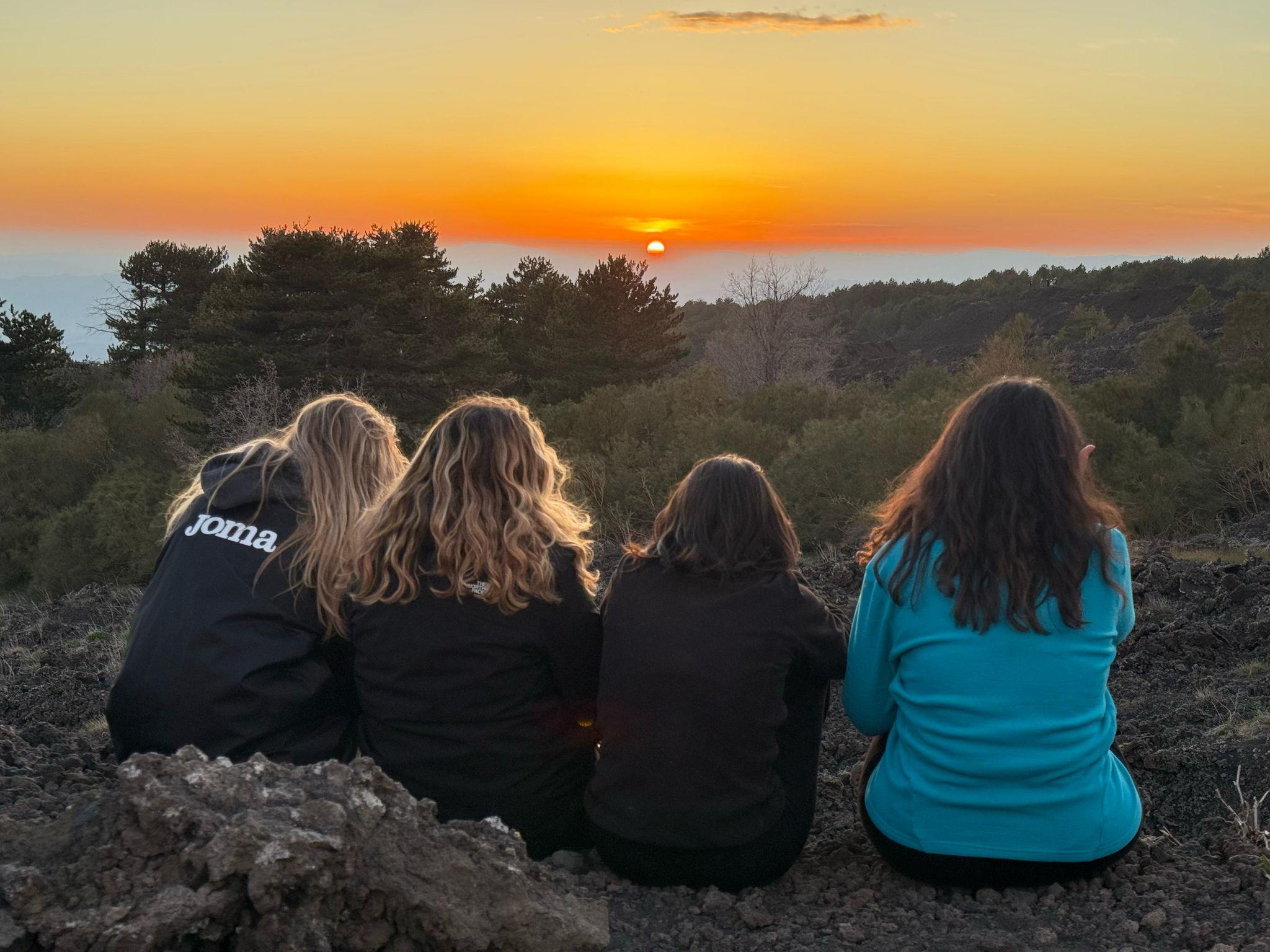
Watch the sun set over Sicily's volcanic landscape from 2,000m, explore lava caves, and taste local products
Reserve
Hand-picked by our editors — only the best 5 experiences from 22 reviewed.
Verified partners for every tour, free cancellation where available, and instant confirmation on every booking.
5 hr
Watch the sun set over Sicily's volcanic landscape from 2,000m, explore lava caves, and taste local products
Reserve
6 hr
Ascend Europe's most active volcano to 2,000 meters, explore lava caves, and savor Sicilian treats
Reserve
5 hr
Journey to Europe's tallest active volcano for sunset views, lava cave exploration, and Sicilian product sampling
ReservePrices from verified partners. Availability updates in real time at checkout. Free cancellation policies apply where shown.
The landmarks, rooms, and views travelers on this tour remember — all visible on a single visit.
A massive volcanic depression offering deep views of historical lava flows
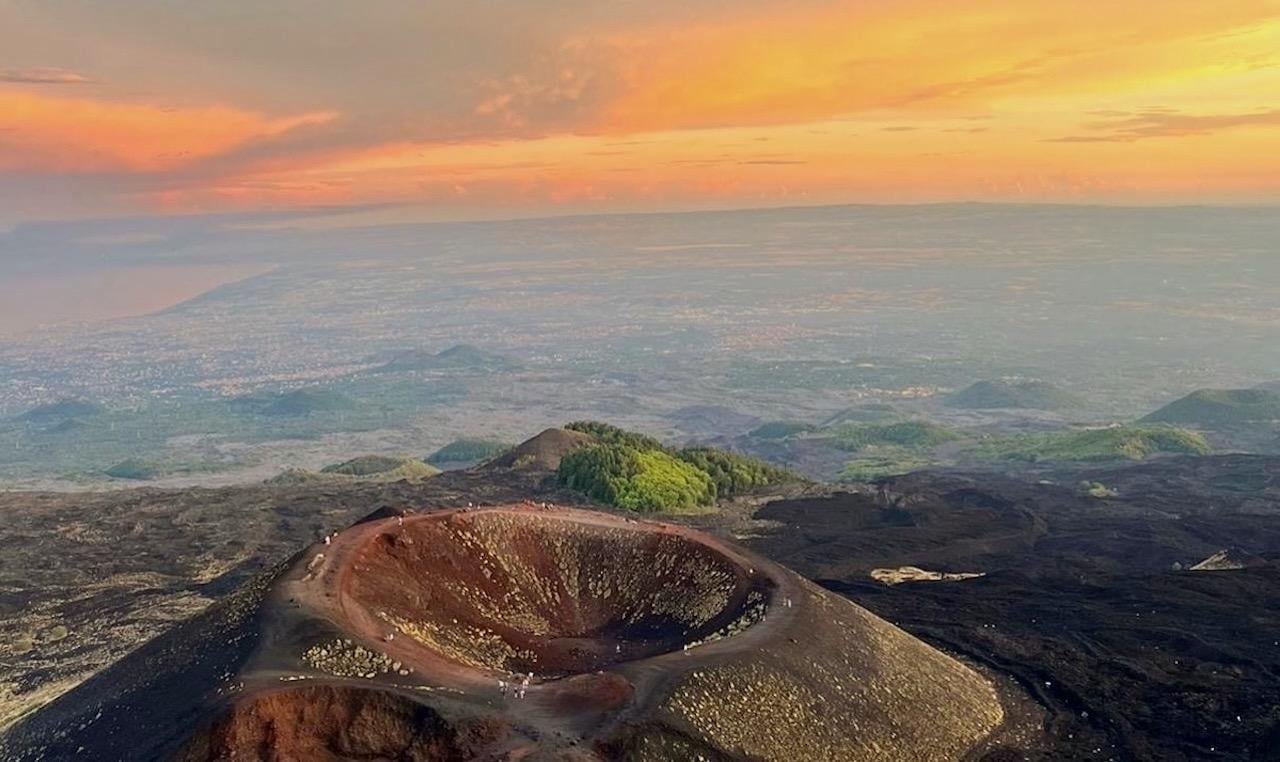
Two extinct craters formed during the 1892 eruption that are easily accessible on foot
The most active part of the mountain where visitors can observe geothermal activity
Underground tunnels formed by ancient lava flows that provide a unique geological perspective
The main vent of the volcano displaying dramatic volcanic geology and steam emission
Daytime summit treks offer superior access to active volcanic craters, while an etna excursion sunset provides a more relaxed atmospheric experience. They complement each other; most visitors who do both call the daytime summit trek the more physically challenging pursuit.
| Feature | Top pick Sunset Excursion | Daytime Summit Trek |
|---|---|---|
Lighting conditions |
Golden hour glow | Harsh direct sunlight |
Physical intensity |
Moderate walking | High exertion hiking |
Temperature |
Cooler evening air | Warmer peak temperatures |
Crowd levels |
Lower visitor density | Higher peak traffic |
Photographic opportunities |
Dramatic silhouette contrasts | Panoramic geological vistas |
| See tickets → |
Verdict: Choose the daytime summit trek for geological exploration using etna excursion sunset tickets if you prioritize atmospheric landscapes and comfortable temperatures over reaching the highest crater rims.
Choose your ticket, select your date, and reserve in under two minutes. Secure checkout handled by our verified partner.
Instant confirmation by email, with a mobile voucher you can save offline. No printing, no queuing at a collection desk.
Arrive at the entrance, show your voucher on your phone, and walk in. Most tickets include priority or skip-the-line access.
Practical details for your visit straight from our verified partners — hours, access, rules, and how to get there.
Piazzale Sapienza, 95030 Nicolosi CT
Main parking area
Follow SP92 north from Nicolosi to Rifugio Sapienza.
AST bus service departs from Catania train station.
Sturdy hiking boots are essential for uneven volcanic terrain. Bring layered clothing as temperatures drop significantly at higher altitudes during an etna excursion sunset.
Small daypacks are allowed for your etna excursion sunset tour. Secure all personal belongings as there are no lockers available at the mountain base.
Photography is permitted throughout the park during your etna excursion sunset. Drones require special permits and are generally restricted near active volcanic vents.
Access to high crater areas is limited for individuals with reduced mobility. The Rifugio Sapienza area is accessible by car, but crater paths consist of loose volcanic ash.
Mobile reception is intermittent at higher altitudes. Download offline maps of the volcano before starting your ascent.
Children are welcome on guided walks, though terrain can be challenging. Ensure minors wear appropriate footwear for the volcanic landscape.
Carry sufficient water and snacks for your visit. Local restaurants near the base offer Sicilian cuisine, but amenities are sparse near the summits.
Pets are allowed on leashes within public areas of the park. They are generally not permitted on high-altitude cable car or 4x4 transfers.
Always monitor local seismic activity updates before your trip. Follow the instructions of certified mountain guides during your etna excursion sunset tickets usage.
Best time to go, insider tips, nearby landmarks, and the cancellation fine print — flip through to skim what matters to you.
How crowds, weather, and events shift across the year.
Mild temperatures for hiking and crater visibility.
Longer days and optimal weather for late evening views.
Cooler air and reduced crowds for your etna excursion sunset.
Deep snow often limits access to high-altitude areas.
Small details that turn a good visit into a great one.
Arrive between 08:30–16:00 to ensure enough daylight for crater logistics. Avoid the heat of midday by timing your ascent for the afternoon transition.
Weather changes rapidly; bring a windproof jacket for your etna excursion sunset. Even in September, summit temperatures drop below 10 degrees Celsius.
Sandals are unsafe for the loose volcanic scoria found on most trails. High-top hiking boots provide necessary ankle support.
Booking etna excursion sunset tours with certified guides ensures safety near restricted zones. They provide specialized gear and expert safety briefings.
The high altitude and dry volcanic dust lead to rapid dehydration. Pack at least 1.5 liters of water per person.
Non-bookable sights within a short walk — free to visit, easy to pair.
Extinct volcanic cones accessible via short trails.
Panoramic vantage point over the volcanic landscape.
Lava tube featuring permanent ice formations.
Exhibits on regional geology and biodiversity.
Flexible, no hidden fees.
Full refunds are typically provided for cancellations made at least 24 hours in advance. Entrance to the national park base areas remains 0 EUR for all visitors.
Hand-picked options within walking distance — pick a district for vibe, or a specific hotel for convenience.
High-altitude lodging at the mountain base.
Town center with various guest houses.
Urban base for visiting Mount Etna.
Mount Etna erupts on average every eighteen months, yet its summit craters remain accessible to visitors between eruptive cycles. The volcano's flanks host more than three hundred subsidiary cones, formed by millennia of lateral eruptions that carved lava caves and sculpted the lunar terrain visible from Rifugio Sapienza at 1,910 metres elevation. Cable cars and off-road vehicles transport visitors from the base to Torre del Filosofo at 2,920 metres, where authorized guides lead groups across sterile volcanic sand to active fumaroles venting sulphurous gases at temperatures exceeding ninety degrees Celsius. Etna's geological restlessness earned it UNESCO World Heritage status in 2013, recognized as one of the world's most documented volcanoes with eruptive records dating to 1500 BCE. Its basaltic lava flows cool into ropy pahoehoe textures on gentler slopes and jagged a'a formations where gradients steepen. The mountain's eastern flank collapsed 8,000 years ago, creating the Valle del Bove, a five-kilometre-wide amphitheater of stratified lava layers that records Etna's construction over half a million years. Winter snows blanket the summit from November through May, while summer heat bakes the lower vineyards that produce Etna DOC wines from vines rooted in mineral-rich volcanic soil. Evening light transforms the crater zone into a study in contrasts. Shadows deepen inside lava tubes formed when molten rock drained from cooling channels, leaving voids large enough to walk through. Pyroclastic cones glow rust-orange in the slanting sun, their surfaces textured by bombs ejected during Strombolian eruptions. The Ionian Sea stretches sixty kilometres east, its blue expanse darkening as the sun descends behind Sicily's interior. Etna excursion sunset departures from Rifugio Sapienza coordinate transport schedules with the season's shifting dusk, ensuring visitors reach the upper slopes as daylight fades and thermal vents begin to pulse with visible heat shimmer. The mountain's persistent activity—seismic tremors, gas emissions, intermittent lava fountaining—underscores the immediacy of standing on an active stratovolcano whose next eruption remains unpredictable yet statistically imminent.
"Etna's geological restlessness earned it UNESCO World Heritage status in 2013, recognized as one of the world's most documented volcanoes with eruptive records dating to 1500 BCE."
A step-by-step walkthrough of the visit — what you'll see, how long each stage takes, and the details that matter.
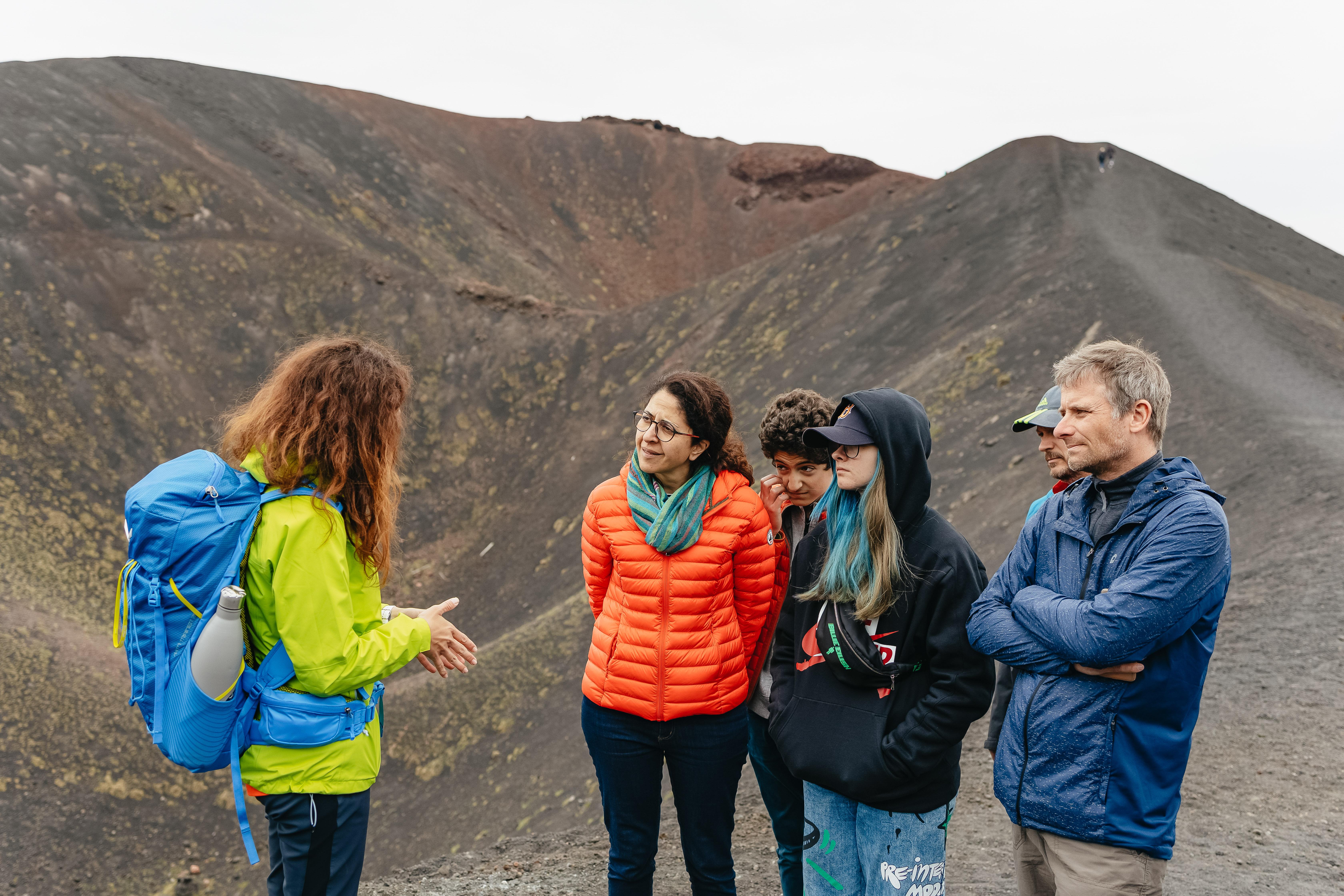
You meet your guide at Rifugio Sapienza as afternoon shifts toward evening, the air still warm from the day's accumulated heat. The cable car lifts you through altitude zones where vegetation thins to isolated clumps of Etna broom, its yellow flowers already closed for the day. At the upper station, you transfer to a four-wheel-drive vehicle that climbs a track carved through 2002 lava flows, their black surfaces cracked into geometric plates. Your guide distributes helmets before leading the group upslope on foot. Loose scoria crunches underfoot, each step sinking slightly into the porous volcanic gravel. You pause at a lava cave entrance where the rock overhead forms a natural arch; inside, the temperature drops and your headlamp reveals frozen drips of once-molten basalt coating the walls. Emerging into open air, you continue toward the crater rim as the sun drops lower, casting long shadows from summit fumaroles that hiss with escaping steam. At the designated viewpoint, you watch the light drain from the Valle del Bove below while the sky shifts through violet and indigo. The guide pours samples of Etna Rosso, the wine's mineral edge matching the stark landscape. As darkness settles, the mountain's heat becomes palpable—thermal cameras reveal the ground glowing beneath your boots, a reminder that magma circulates just kilometres below.
The park area near Rifugio Sapienza is open from 08:30–17:30 daily.
You should purchase etna excursion sunset tickets in advance to secure your transport to higher crater areas.
While base areas are open to the public, high-altitude crater access requires certified guides for safety.
Wear sturdy hiking boots, layered clothing, and a windbreaker for your etna excursion sunset.
Entry to the national park base areas is 0 EUR, though transport to higher elevations costs extra.
Yes, children are welcome on etna excursion sunset tours provided they are physically capable of walking on volcanic terrain.
The standard meeting point is Rifugio Sapienza, located at Piazzale Sapienza, 95030 Nicolosi CT.
Tours may be rescheduled or canceled for safety; always check your provider's policy before departing.
Food options are limited at the summit, so bring snacks and water for your etna excursion sunset.