
English| EUR
Suggested for you
More currencies
Choose a language
Mount Etna draws hundreds of thousands of visitors each year, many booking guided excursions to reach the active craters. Tour experiences vary widely based on operator quality, weather conditions, and realistic expectations about what a volcanic landscape delivers. This review synthesizes visitor feedback to help you choose the right approach.
Quick answer
Most Etna excursions combine a cable car ascent to 2,500 meters with either a guided 4x4 transfer and crater-edge hike or a longer trekking route. Visitor reviews consistently highlight three factors: weather disrupts roughly 15–20% of summit attempts during shoulder seasons, guide expertise varies significantly between operators, and physical exertion is underestimated by many first-time volcano visitors. Tours departing from Rifugio Sapienza between 08:45 and 10:00 report the best conditions before afternoon cloud cover.
Europe's most active volcano operates on its own schedule, and that reality shapes every excursion review. Etna's summit craters lie above 3,300 meters, accessible only when seismic activity permits and weather cooperates—conditions that shift within hours. Visitors booking guided tours often expect a guaranteed crater view, but the mountain delivers something more dynamic: an environment where volcanologists monitor tremors in real time and guides adjust routes based on wind direction and gas emissions. The cable car from Piazzale Rifugio Sapienza carries tourists to the mid-mountain station at Torre del Filosofo, where the landscape transitions from pine forest to lunar desert. From there, excursion paths diverge. Some operators use 4x4 vehicles to shuttle groups higher before a 30-minute hike to authorized viewpoints near the southeast crater. Others lead multi-hour treks across older lava fields, requiring sturdy boots and realistic fitness levels. Visitor feedback splits along this line: jeep-assisted tours receive praise for efficiency but criticism for limited time at altitude, while hiking-focused excursions earn higher marks for immersion but frequent complaints about underestimated difficulty. Guide quality emerges as the determining factor in satisfaction. Knowledgeable volcanologists explain fumarole chemistry, read the terrain's volcanic history, and manage group safety during sudden weather shifts. Less experienced guides stick to rehearsed scripts and struggle when conditions require route changes. Reviews from autumn 2026 note that morning departures consistently outperform afternoon slots—not only for clearer summit views but because guides are fresher and groups smaller before the midday tour-bus arrivals. The national park itself charges no entrance fee, but cable car tickets and guided summit access add significant cost. Independent hikers can explore lower slopes freely, though reaching the active craters without authorized guides has been prohibited since 2021 due to unpredictable eruptions. Winter months bring snow above 2,000 meters, transforming the excursion into a technical mountaineering challenge that many summer-focused operators decline to offer. Visitors comparing Etna volcano tours should verify whether their operator holds current alpine guide certifications and maintains direct communication with the Istituto Nazionale di Geofisica e Vulcanologia monitoring team.
“The mountain delivers something more dynamic than a guaranteed view—an environment where conditions shift within hours and guides earn their value.”
The best arrival window is 08:45–10:00 to beat large tour groups and maximize time before afternoon weather changes. Planning your excursion during shoulder seasons offers the most stable conditions for exploring the volcanic landscape.
Mild, 10°C to 18°C. Clear skies often favor morning hikes.
Warm, 15°C to 25°C. Afternoon cloud cover and potential instability occur frequently.
Cool, 8°C to 16°C. Generally stable weather, though higher altitudes become cold.
Cold, -5°C to 5°C. Snow is common, requiring specialized gear for access.
Verdict: The optimal time for a visit is Tuesday to Thursday, arriving between 08:45–10:00 during the months of April or October.
The cable car and associated infrastructure on Mount Etna operate on a consistent schedule seven days a week. Visitors can rely on these established hours when planning their excursion.
Access to the Mount Etna national park base areas is free of charge. Visitors planning to reach higher altitudes or access specific volcanic zones will encounter additional costs for transport and authorized services.
Verdict: While the base entry is 0 EUR, most visitors pay for cable car or guided tour services to reach higher elevations.
Mount Etna is accessed primarily via Piazzale Rifugio Sapienza, located at 95031 Nicolosi, Sicily, Italy. The most flexible approach for reaching this high-altitude destination is by personal vehicle.
SP92 road from Nicolosi or Zafferana Etnea
AST bus line from Catania Central Station
Private transfer from Catania city center
Plan your journey to arrive between 08:45–10:00 to avoid large tour groups and minimize the impact of afternoon weather changes.
Visiting Mount Etna requires coordination between cable car transport and authorized guide services. The complete process from base arrival to summit return takes 4-6 hours depending on your chosen route.
Arrive at Piazzale Rifugio Sapienza in Nicolosi between 08:45–10:00 to secure parking before tour groups fill the lot. The cable car station is a short walk from the main parking area.
Buy tickets at the Funivia dell'Etna station for the ascent to 2,500 meters. Tickets are sold on-site; early arrival reduces queue times during peak season.
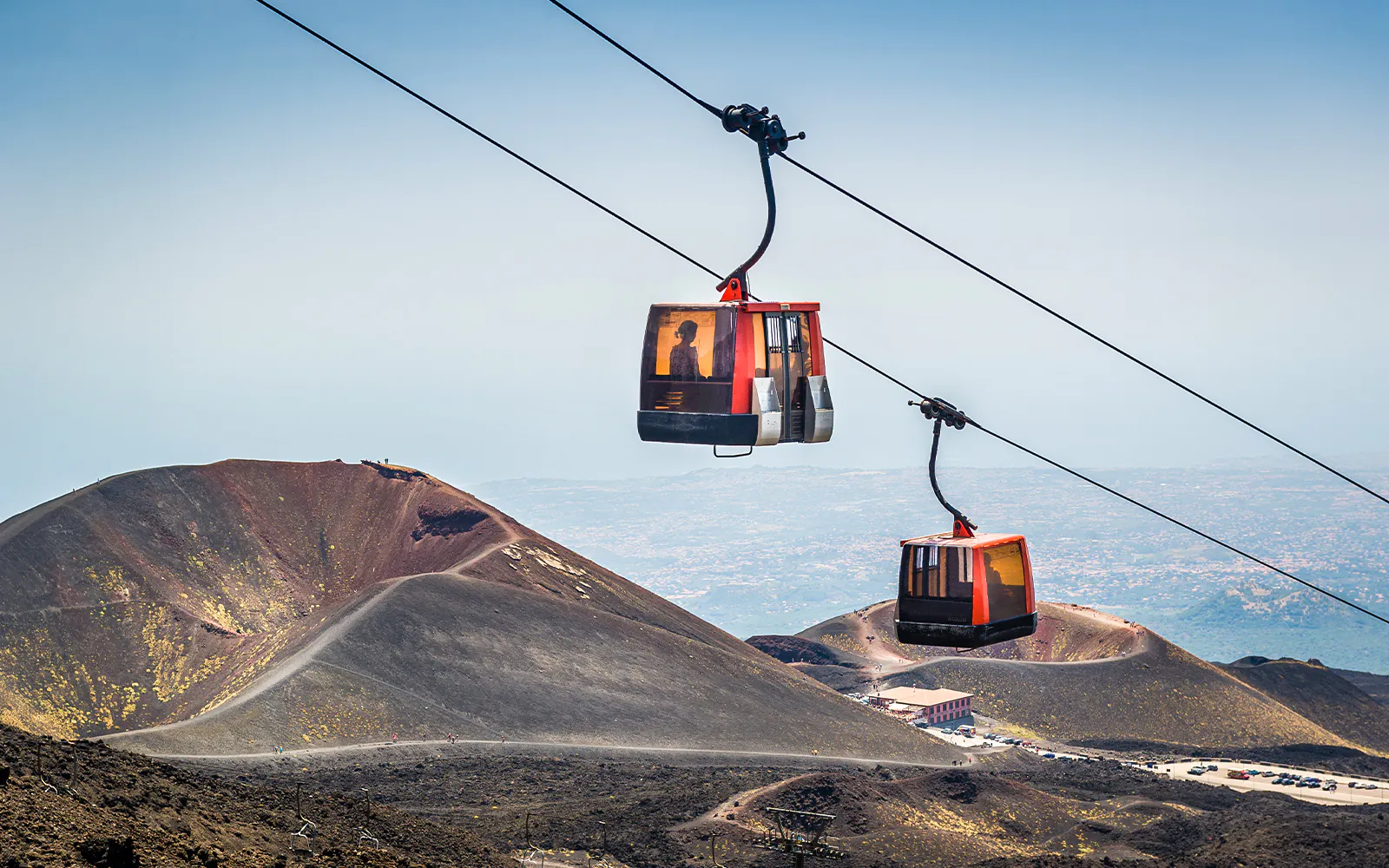
The cable car departs from Rifugio Sapienza and reaches the mountain station at 2,500 meters in approximately 15 minutes. Keep your ticket for potential inspection on the mountain.
At the upper cable car station, connect with licensed mountain guides who lead groups to higher elevations. Independent hiking above 2,920 meters is prohibited; guide accompaniment is mandatory for summit access.
Guides lead groups via marked trails or 4x4 vehicles depending on current volcanic activity and route conditions. The ascent from the cable car station to accessible summit areas takes 1-2 hours.
Descend back to the mountain station and take the cable car down to Rifugio Sapienza. The last descent typically aligns with the 16:00 closing time, so monitor your schedule closely.
Preparation and awareness of environmental conditions are vital for a safe visit to the summit areas of Mount Etna.
Wear sturdy, closed-toe hiking boots with high-traction soles to navigate loose volcanic ash and uneven basalt rock. Standard sneakers often lack the grip and protection necessary for this terrain.
Be mindful of wind direction and avoid low-lying areas if you smell sulfur or notice volcanic gases, which can cause respiratory irritation. If you have underlying health conditions, consult a guide regarding current air quality.
Temperatures fluctuate significantly; wear moisture-wicking base layers topped with a windproof jacket to handle sudden weather shifts at high altitudes. Even on sunny days, the summit environment can be cold and windy.
Check the official activity status before departure, as volcanic events can lead to sudden trail closures by authorities. Rely only on real-time updates provided by official civil protection sources.
Stay on marked paths to avoid unstable crater edges and loose scree slopes. Walking off-trail poses a risk of falling into fissures or dislodging rocks onto other hikers below.
Everything you need to know about etna excursion review
An etna excursion review offers valuable insights into trail conditions and necessary gear. By consulting a recent Mount Etna trekking guide, visitors can better prepare for the high-altitude environment. Many travelers use these accounts to determine if they need a mountain guide for specific zones. Checking a detailed etna excursion review ensures you understand the logistical requirements before you arrive.
The best arrival window is 08:45–10:00. Arriving early helps you avoid large tour groups and provides more time to explore before afternoon weather patterns shift. This timing is essential for a smooth experience on the volcano.
There is 0 EUR entrance fee for the national park base areas. Access to the general volcanic landscape is free, though specific activities like cable cars or private tours require separate payment. Always verify costs for additional services on the official site.
When selecting a Catania volcano tour, prioritize operators that include professional mountain guides and proper safety equipment. A high-quality etna excursion review often highlights the importance of choosing authorized services for restricted crater zones. Focus on providers that offer flexible timing to accommodate weather changes.
Mount Etna can be accessible for families, though high-altitude areas may be strenuous for young children. An informative etna excursion review often suggests sticking to the lower craters for easier walks. Always check weather conditions and physical requirements before planning a trip with kids.
The cable car is not part of the national park entry fee. It is a separate service operated by the funivia, and you must purchase a ticket for it if you choose to use it to reach higher elevations. Refer to the official site for operational updates.
The site is open daily from 08:45–16:00. These hours apply throughout the week, including weekends and holidays. Plan your visit within these times to ensure access to the facilities.
Etna Sunset Excursions
Read more GuideEtna Excursion Prices
Read more Tickets & toursEtna 4x4 Excursions
Read more GuideEtna Lava Flow Excursions
Read more GuideEtna Tour Temperature and Weather
Read more Tickets & toursEtna Excursions from Catania
Read more Tickets & toursEtna Excursions from Taormina
Read more Tickets & toursEtna Summit Tours
Read more